Here are some things which have been occupying me musically and personally over the last week.
This week, I want to talk about a technique which frequently populates my music. When daunted by a blank page, it is one of the first places I go to – musical cryptography. I did not invent the technique, or the term for it, “crypto-serialism,” but I have found some success with it. The essence of the technique is developing a musical chiper to convert strings of characters into musical pitches; a title, concept, name, or line of text or poetry becomes a series of notes.
Below is the cipher I typically use:
There are several good examples of this in the early music of Dr. Neal Endicott, a composer/theorist I met while I was completing my undergraduate work at Western Michigan University. His Boketto for solo flute, riverrun for solo saxophone, and Come Slowly, Eden are a few which come to mind. You can see the conversion of numbers using a similar method in my works in the Elements series of musical miniatures (for example, the properties of Hydrogen and Helium).
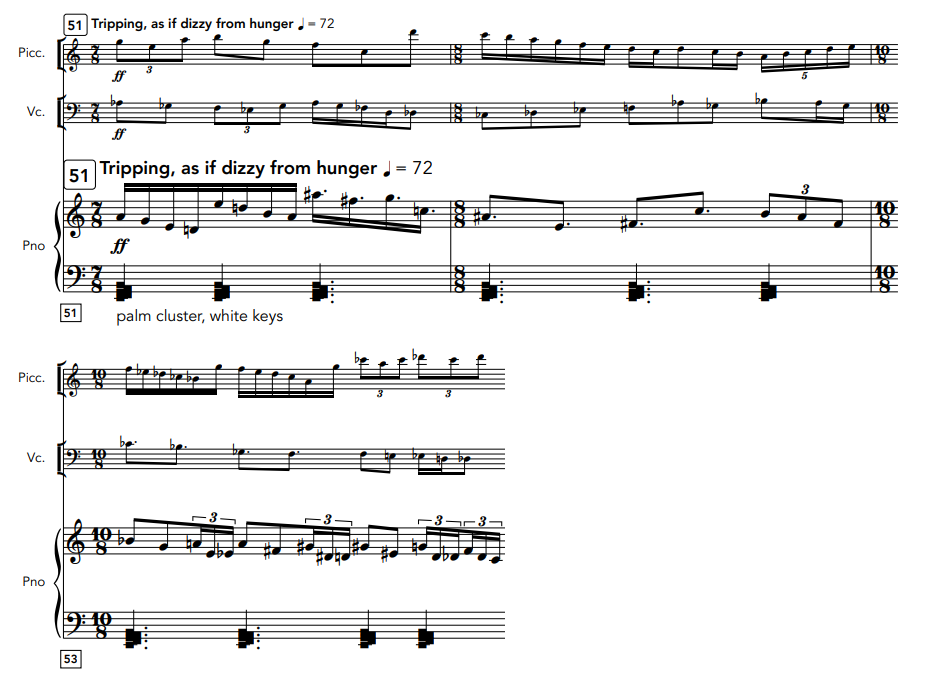
The most extensive use in my music can be heard in the recently-released Leviathan. Inspired by the mythological creature as portrayed in the Bible and the cult television series Supernatural, several musical motives and chords are derived from the supposed qualities of the creature. In the example below, the word “hunger” is converted into pitches. The vertical sonority is based on the letters in order, from the lowest note to the highest.
The Hunger Chord, mm. 57-59, Leviathan.
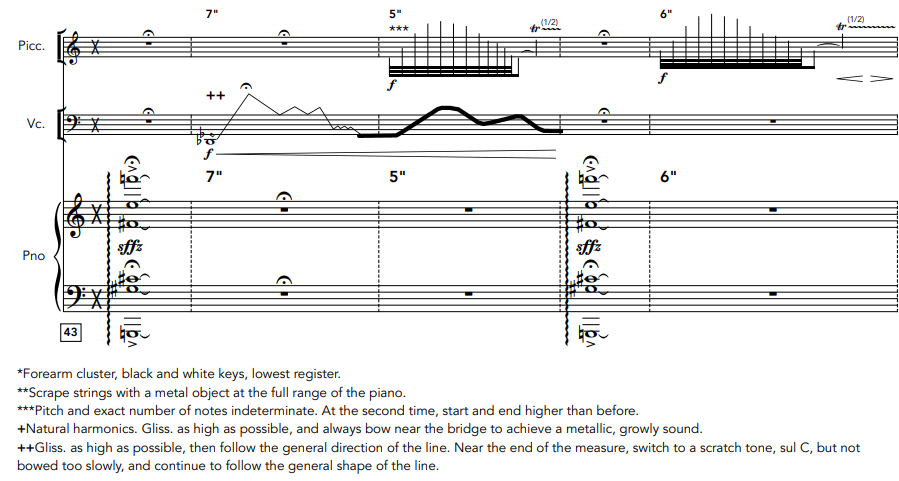
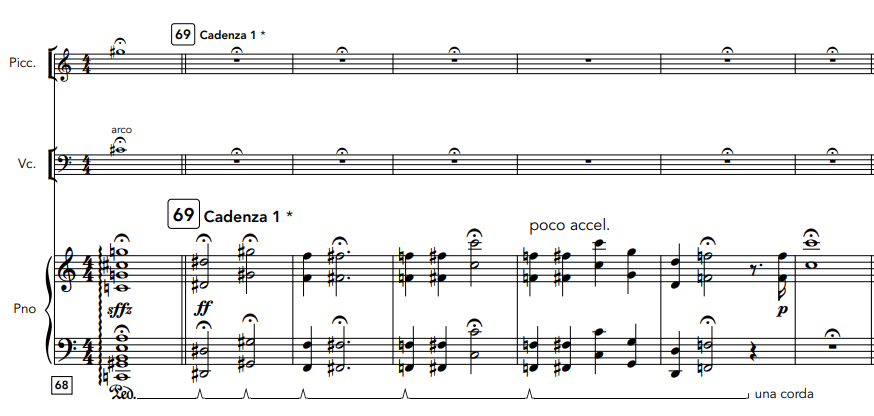
However, the order of the pitches in the vertical sonority aren’t always important, as in the below rendering of the word “Leviathan” (left). The piano spells out in pitches the word “Purgatory,” the mythical home of the creature.
The Leviathan Chord, mm. 68; and Purgatory, spelled out by the piano, mm. 69-74, Leviathan.
There are several creative avenues to explore with this method. These include rhythm, repetition, register, and converting parts of these musical words into musical motives. The possibilities are endless, but it is a definite method of finding where to start! I will use it in the baritone saxophone commission I am working on this year, and will discuss other techniques I use in future blog posts.
Personally, the week was eventful! I worked the state music educators convention; it’s always nice connecting with music educators whom I don’t always get to see, and I was recognized a few times for my music (which is always surreal!). Dark Matter was featured on a reading session, and a set of my music was won in a raffle (I autographed the score for the director!). I’m always grateful for the love and support.
Feel free to share your thoughts in the comments!
Written 2/4/24
Processing…
Success! You're on the list.
Whoops! There was an error and we couldn't process your subscription. Please reload the page and try again.
Here are some things which have been occupying me musically and personally over the last week.
I seem to be staying busy! I had a great session with my therapist; I’m taking a composition lesson tomorrow; and, I am working this weekend at my state’s music educator conference. Hence, I am writing this post on Tuesday to be posted Saturday.
Musically, I’ve been thinking a lot about chamber music – I rather enjoy this kind of writing, but it doesn’t have much of an audience, compared to my band and orchestra music. This year, I will likely write 3-4 band and orchestra works, and about the same for chamber music. However, chamber music is my focus, hence the #2024saxophoneproject (content continues below).
I’ve also taken some of my writing time to make some much-needed changes to my website – cleaning up some broken links, removing some old works from my catalog (they just aren’t any good, honestly), and streamlining where my outbound links go – specifically, to publishers and SheetMusicPlus, where much of my chamber music and arrangements are distributed. I’m a big fan of their digital sales/licensing model. I’ll be continuing this work where I can. And I’ve changed the theme to be brighter, and hopefully easier to read and interact with.
I’ve experimented with advertising this week – spending some money to (hopefully) increase my web traffic here. I hope my weekly blog will help with that too.
Feel free to let me know your thoughts in the comments!
Written 1/30/2024
Processing…
Success! You're on the list.
Whoops! There was an error and we couldn't process your subscription. Please reload the page and try again.
Here are some things which have been occupying me musically and personally over the last week.
Professionally, I’ve been quite busy. My day job sapped a lot of my energy. But work leads to success, and I’ve set a goal to be better at my day job. I made the Top 10 for sales for the first time this week!
Musically, I’ve been having a lot of fun listening lately. I normally listen to podcasts or audiobooks, just because music is my job, and it’s nice to escape that at times. But I am researching for some big projects, so I’m listening to a ton – music for saxophone, specifically, and chamber music that comes up in my social media/YouTube feeds. I’m enjoying a recent recording of a composition of mine, which was featured on a score video channel (content continues below video):
As far as writing goes…I’m revising a band march I wrote last year, and readying some other scores for sending out to publishers. I’m working on a Christmas-themed piece for band based on my Latvian heritage. And I’m starting my #2024saxophoneproject (details here). And I’m starting to think more like an entrepreneur…especially regarding social media engagement.
Feel free to share your thoughts in the comments!
Posted 1/27/24
Processing…
Success! You're on the list.
Whoops! There was an error and we couldn't process your subscription. Please reload the page and try again.
Fanfare in a Blue Pilu was inspired by my love of the music of Jimi Hendrix (specifically, the Hendrix Chord) and the postminimal fanfares of John Adams. The title refers to the scale used, the raga Pilu, although I derived the scale from the opening harmonic idea: the Fdim/F7 polychord which sounds quite bluesy.
The work was commissioned and performed by Brandon Dicks of the Rhode Island Recording Ensemble. Dicks, a doctoral student at Arizona State University, commissioned a series of trumpet ensemble fanfares to support composers through the pandemic; he performed and mixed all parts for the premiere recording.
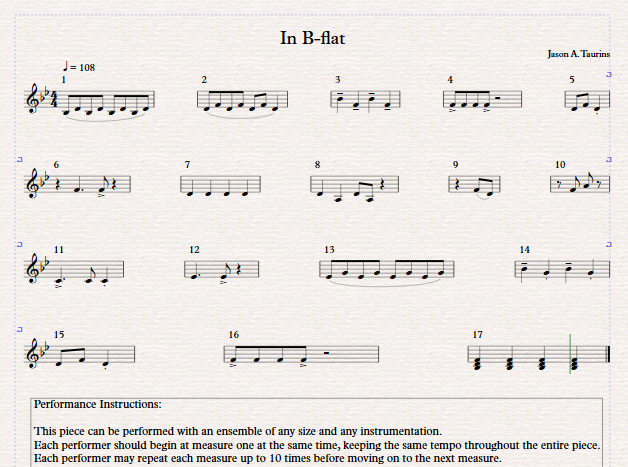
Introduce your students to minimalist works with this grade 1 piece suitable for middle and high school bands, inspired by “In C” by Terry Riley. Click here for a recording.
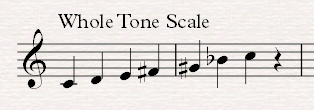
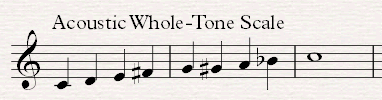
I’ve been working on an exciting new project lately, and I think I’ve come up with a pretty neat idea for a scale to use. It’s a hybrid scale, consisting of a hybrid scale + a mode of limited transposition. Behold, the Acoustic Whole-Tone Scale! Perhaps I’m just coming up with a pretentious title for an octatonic scale with an extra note in it. Or an acoustic scale with an extra note. =P
It contains the notes of the Acoustic (AKA Lydian-Dominant) scale and the whole-tone scale, hence the name:
C D E F# G G# A Bb C (or perhaps C D E F# G Ab A Bb C)
See below the notes of the two scales it is a hybrid of. Or is it a hybrid of a hybrid?